
The Union Budget for 2026-27 is expected to sketch out a road map for trebling the cooperative sector's contribution to the Indian economy over the next decade, with the aim of bringing 500 million people within its ambit, in line with the objectives of the National Cooperative Policy, 2025.

Here are the key numbers to watch out for in the Union Budget for 2025-26:

The Industries Association of Uttarakhand, an organisation of MSMEs, has prepared an agenda for the Budget.

The Indian government has approved the introduction of one billion polymer banknotes in Rs 10 and Rs 20 denominations for field trials, aiming to enhance durability. This move comes as the Finance Minister also addressed Parliament on declining retail inflation, GST reforms, and other fiscal measures taken to support the economy and household consumption.

The Budget emerges as a measured, credible and forward-looking policy document that reinforces India's commitment to remaining a stable, reform-oriented economy amid an increasingly fragmented global landscape, says A Balasubramanian.

India is a global leader in software development services, IT enabled services, knowledge process outsourcing services and contract R&D services relating to software development, Sitharaman said noting these business segments are quite inter-connected with each other.

The best course for the government at this time would be to tighten the seat belt a little more, without compromising on its investments in creating better infrastructure and giving a push to privatisation, points out A K Bhattacharya.

The main responsibility for producing the Budget rests with the Budget Division of the Department of Economic Affairs in the finance ministry

Finance Minister Pranab Mukherjee presented the Union Budget 2010-11 in parliament on Friday.
Fiscal deficit planned to reduce to 4.8 per cent in FY2014, subsidy bill remains elevated. Proposes to reduce fiscal deficit to 3%, the revenue deficit to 1.5 per cent and the effective revenue deficit to zero by FY2017.

Finance Minister Nirmala Sitharaman on Monday presented the Budget for 2021-22 in the Lok Sabha that is expected to provide relief to the pandemic-hit common man as well as focus more on driving economic recovery through higher spending on healthcare, infrastructure and defence amid rising tensions with neighbours, As India emerges from the COVID-19 crisis, the ninth Budget under the Modi government, including an interim one, is widely expected to focus on boosting spending on job creation and rural development, generous allocations for development schemes, putting more money in the hands of the average taxpayer and easing rules to attract foreign investments.

After the last Budget's announcement of a major tax relief for those earning an annual salary of less than Rs 12 lakh, there is not much that individuals can look forward to in the forthcoming Budget, points out A K Bhattacharya.

Chief Economic Adviser V Anantha Nageswaran has urged the industry to invest in skilling, capability development, and innovation to counter the challenges posed by artificial intelligence, particularly for Global Capability Centres (GCCs). He noted that while the government has supported GCCs through Budget measures like simplifying transfer pricing and promoting expansion into tier-II/III cities, industry must move beyond low-cost execution to thrive in an an AI-driven landscape. Nageswaran emphasised that AI displaces routine tasks, necessitating a focus on higher-value work and continuous skill enhancement to maintain India's competitive edge.

Finance Minister Nirmala Sitharaman presents her fourth Budget in Lok Sabha on Tuesday.

The forthcoming Budget could think of maintaining public capital expenditure at 3 per cent so that domestic resources are available for private investments, points out N R Bhanumurthy.

Bharat Electronics, Power Grid, NTPC and HDFC Bank were among the other major gainers. However, Infosys, Tata Steel, Eternal and Tech Mahindra were among the laggards.
CA Sumeet Mehta analyses the Union Budget 2026-2027, identifying key positives and negatives.
CII director general Tarun Das said, "It has outlined new strategies for growth with reduction of excise duty."
Finance Minister Arun Jaitley presented his first Budget on Thursday.

Union Finance Minister Nirmala Sitharaman announced the government's plan to establish a high-powered committee to examine reforms for the banking sector, aligning it with the vision of a 'Viksit Bharat' (Developed India) and India's next phase of growth.
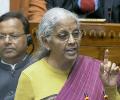
The 2026-27 Budget, seeking to harmonise the government's imperative to grant certainty while ensuring a rational tax policy, had several notable announcements to usher in halcyon days, says Mukesh Butani.

The government may provide for targeted fiscal incentives and allocation of funds for promotion of green hydrogen in the country in Union Budget 2022-23, which is slated to be unveiled in Parliament on Tuesday. The government launched National Hydrogen Mission in 2021. Earlier this month, Power and New & Renewable Energy Minister R K Singh had indicated that a green hydrogen policy will be unveiled in February which would feature many incentives to boost green hydrogen in the country. "While 2021 saw the launch of National Hydrogen Mission, it is likely that the Budget may provide for targeted fiscal incentives for R&D in green hydrogen segment, creation of domestic supply chain for hydrogen and reduce customs duties on electrolysers to boost green hydrogen production," says Venkatesh Raman Prasad, Partner, J Sagar Associates (JSA).

Trinamool Congress national general secretary Abhishek Banerjee on Friday said not a single "traitor", who crossed over to the dissident factions to "protect their backs", will be allowed to return to the party.

Various reforms, including GST, labour codes, and quality control order, have been rolled out since August 15.

Senior New Delhi-based journalist R Rajagopalan, who has been closely following the Union Budget preparations since 1977, lifts the veil off India's most secretive operation.

Softening the demonetisation blow, the Budget for 2017-18 on Wednesday halved the tax to 5 per cent on incomes up to Rs 500,000 but proposed a new surcharge of 10 per cent on incomes between Rs 50 lakh and Rs 1 crore and raised duties on cigarettes and pan masala while stepping up allocations for infrastructure, rural, agriculture and social sectors.

Among its 27 recommendations for the Union Budget is this: It has suggested that equity investments held for more than one year and up to three years should be taxed at 12.5 per cent on gains exceeding 2 lakh in a financial year.

'If a student can get a good teacher, quality content and mock tests at no cost, it becomes very hard for a mid-tier coaching centre to keep charging for the same lecture.'
Finance Minister Pranab Mukherjee presented the Union Budget for 2012-13 on Friday.

The Budget Session will be held from January 29 to April 6.
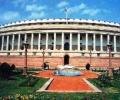
According to the sources in the government, Union Budget 2012-2013 is likely to be presented in Parliament on March 19, 2012.

The fiscal consolidation path and Rs 1 trillion stabilisation fund provide room to absorb mild shocks, but sustained oil-price increases pose risks.

Finance Minister Arun Jaitley on Monday presented the Union Budget for 2016-17.

Education sector experts agree that using the "best technology" was essential to ensure students did not have to sit for an examination all over again because of a question paper leak.

'We kept this Budget on a larger plank, rather than on one incident, however serious.'

Will Finance Minister Arun Jaitley's Budget 2016 be able to put India on a growth trajectory?
The idea of back-loading the target of fiscal consolidation is perhaps guided by the government's desire to be prepared for any adverse developments in the coming year, points out A K Bhattacharya.

The Union Budget for 2026-27, presented by Finance Minister (FM) Nirmala Sitharaman on Sunday, which was a first, had an excellent domestic macro backdrop. According to the first advance estimates, gross domestic product (GDP) in constant prices is projected to grow 7.4 per cent in the current financial year, against 6.5 per cent in 2024-25.

About 50 respondents from across banks, financial institutions and intermediaries including brokerage firms, corporate bodies, consulting firms, research institutes and industry bodies participated in the survey
